

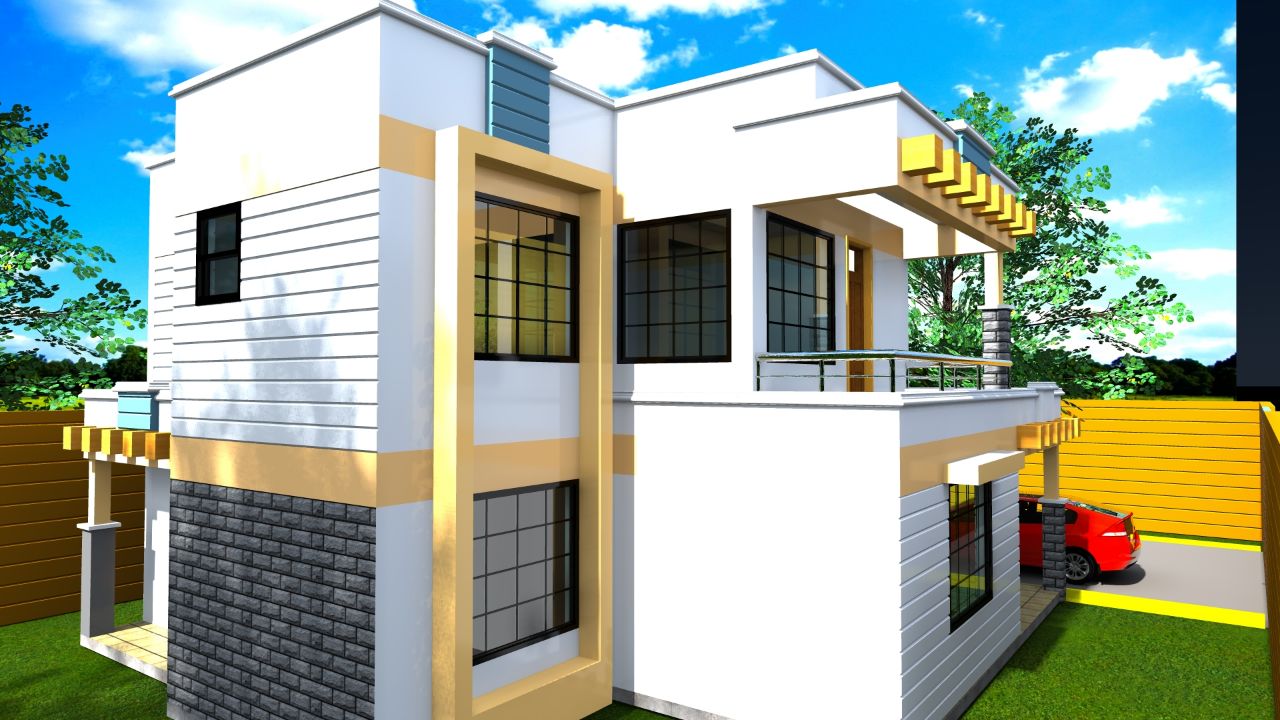
Costly Mistakes We Made Building our Home and How You Can Avoid Them
Building a house is like having a wedding.
When it is happening, every cost seems reasonable and justifiable. After all, a wedding only happens once in our conservative African setting. Right? Who wants to look like they are struggling on the biggest day of their life? One must import the wedding dress. We need to hire that dream stretch limo for the day. We pay so much for the cake that later on, one wonders if that was reasonable!
The same happens when building. Everybody who stands to benefit from your decisions sells you the dream house and convinces you that it does not come cheap! Blue-eyed you plays along struggling to pay the bills, not because they make sense, but because the dream house can’t be compromised!
Ten years ago, we built our first house.
My budget would have comfortably done a two-bedroom bungalow. But I visited a friend who had done a beautiful maisonette. And my dream changed. I was going to build a maisonette.
That is where my problems began.
Armed with a dream and part of the budget, we set off to build a home that would be the envy of our friends. We had all the local government approvals so hide and seek with the building inspectors was not a worry. By then, the National Construction Authority (NCA) was not yet born.
At 28 years and building a home in Nairobi was dizzying! Ok. At least for me, it was.
Sleepy Eyed Young Men
On the day of groundbreaking, my fundi correctly advised me to stay away. My presence could hike the asking price for labourers if they had direct access to the developer. No sooner had they finished marking out the foundation dimensions than a group of sleepy-eyed young men descended on site.
They had shovels, mattocks and jembes.
They didn’t say much, just that they had exclusive rights to digging foundations for all buildings in that locality. No one on site had ever had such an encounter.
My fundi was at a loss. He had already sourced all the unskilled labourers he needed for the work and agreed on pay.
The second group determined their price.
A few quick consultations and we realized that the second group had an unspoken part of their demand. That they would do the foundation whether we allowed them or not. And they would do it at their price.
Stalemate.
A few quick consultations later, the second group was allowed to do the work.
Lesson number one. Understand the local dynamics and hire locals if possible. They will be your neighbours at some point. Won’t they?
In Trouble with Brokers
Being the boss, I called a broker I had met in Githurai ’45 to deliver sand. I had seen his lorry and so agreeing on price was quick.
He delivered quickly, and I paid. My fundi later called to say the sand delivered was by a smaller lorry than we had seen and it was not full.
Lesson number 2. Brokers’ relationships are transactional. Why bet on tomorrow’s business if they can fleece you today?
After that, the work proceeded smoothly, until we needed to get machine cut quarry stones from Ndarugo.
I faithfully got a broker who took me to the quarries. After visiting a few, and settled on one in Nyacaba. He would deliver the stones to my site at twenty-six shillings apiece. I paid for two deliveries.
While waiting on the queue, my fundi sneaked into the quarry office and established the selling price per piece was twelve shillings! I cut out the broker and paid directly for six more deliveries. The quarry attendant warned us not to disclose to the broker because the quarry price was a well-guarded secret among them.
Being the intelligent guy I am, I called another broker I had met earlier. When he learnt that I had paid for the stones and was only seeking transport, he became openly hostile and refused to deal. After much hustle and negotiation, I got a transporter and delivered the stones on-site at just under twenty shillings apiece.
Lesson number three. If you can cut out the brokers, please do. But understand the risk you could be taking.
Spending Wastefully
The next stress was doing formwork for the slab. My fundi usually errs on the side of caution. His advice was that hiring trappers would not be necessarily cheaper since we would still buy some timber for the beams and other places trappers would not fit. He also feared cases of loss and breakages. So I bought the timber.
The actual purchase of timber is a story for another day. My construction was along Thika Road. The most reasonably priced timber I found was in Rongai. I bought it after the seller agreed to transport at no extra cost to my site. That journey’s summary is that it took more than 16 hours, and we got arrested three times for transporting timber without a permit.
At the point of buying, there are always fancy ideas about selling after use. Let’s say; we had a lot of firewood after construction.
Lesson number five. Hire anything you will not need once construction is over. It’s not only a waste of money buying, but it also makes your back yard an unsightly mess.
The Dream Crumbles!
If you remember, I started the work with half the money required. As the works progressed, the funds got dangerously low. Every call from the fundi would come with a panic attack!
Our initial plan was to roof with clay tiles. After buying the timber for trusses and the like, there was no money for tiles. The dream started crumbling.
We agonized for a way forward. Leaving the house to stall at that point would have been wasteful. The elements would spoil the timber. We borrowed short term and bought gauge 32 iron sheets and roofed. For the uninitiated, gauge 32 is the lowest quality available!
Here we were with an incomplete house and no money. We were paying loans, paying rent and paying someone to take care of the unfinished house.
There are no prizes for guessing the struggle that ensued. The next battle was to make the house a little habitable so that we could move in.
Again, we resorted to short term borrowing to do rudimentary finishes on the ground floor. We managed to plaster the walls, install floor tiles and apply one coat of undercoat paint. My electrician gave me a quotation for Kshs. 75,000 for wiring. I sacked him after window shopping and reducing the material cost by more than half. There was no money to connect electricity. We negotiated with a neighbour to share his and moved in.
To picture the house, consider that upper floor had nothing but the walls. No grills or doors let alone plumbing works. Please don’t ask how we blocked off the staircase. The kitchen had only a sink and nothing more.
Every time there was some money, it went to the house. After about four years of directing every cent to the house, it was clear that the dream house would take many more years to complete.
Starting all Over Again
We demanded our lives back. I went back to school, and so did my wife. We later agreed to sell the house and start over again.
Eight years after moving in, we sold the house.
This was our second chance. A chance to start all over again. With a more realistic outlook and better preparation.
We sketched the house we wanted and wrote notes. We were ready to experiment with designs and layouts that were not very common. Our architect did the drawings and had them approved.
We engaged the fundi to prepare cost estimates four months before work began. We visited all the suppliers of various materials and equipment long before we started. By the time we were ready to break ground, we had a clear picture of the fixtures and fittings we’d use, where to source them and their pricing.
But surprises still awaited us.
My fundi arrested!
To fence off the site as required, the bill came to about Kshs. 120,000 just for purchasing the iron sheets. Who spends so much money on stuff you will not need when done with the building?
We refused and tried to find used ones. Luckily, a friend had and agreed to give us at a subsidized cost. Because it would take some time to get them, we decided to go ahead as we waited.
First thing was site excavation. We got an unbeatable rate and took that as a sign that things would go well.
As soon as the excavation began, County Government building inspectors came calling.
Approved plans? Check.
Site board? Nada!
Site fence? Nada!
My fundi was carted away.
We found a way to make peace with them, and excavation proceeded. We did an incomplete board. We fenced off the site and continued working.
Suspension of Works
Through a referral, I got a broker who would submit my plans to NCA for approval. We agreed on a fee, and he proceeded. Later on, he asked for more money, and I refused. This turned out to be a very costly mistake. I, later on, had to engage someone else to do the process paying the full cost again.
I know you will say NCA approvals are free of charge. The submission is made online.
That is true.
But this is Kenya. By the time I was engaging a broker, there was a submission pending that had not moved a single step. My architect had tried pushing it but nothing. Broker number one was not able to conclude the process. Broker number two did it in record time. But it had cost suspension of works for about six weeks to achieve compliance.
Because of the trauma we had buying timber the first time, we swore never to do a roof that requires that. Naturally, a flat concrete roof was our preferred choice.
Then we realized we still needed timber for the slab. We sought out a combination of trappers and timber for hire. The cost for one slab came to half the cost of buying. About five quotations hovered around that. Doing two slabs would be the same as buying. So once more, I found myself buying timber for the slab. However, this second one has a happy ending as we found a buyer after use!
What to do? What not to do?
In his excellent book called “The Commanders,” Bob Woodward has Colin Powel arguing that the first lesson in war is the realization that all the plans count for nothing. On firing the first bullet, no one remembers the tactical plans they had drawn on paper. Instinct takes over.
This proved right for us.
All the costings and plans made before the commencement of works proved woefully inadequate. Many things had been underestimated, including those done by a registered and experienced QS.
Again, as works neared completion, the funds were getting dangerously low.
As a final point, we had to make decisions. Preferred fittings and fixtures revised. External finishes revised and internal finishes ranked and prioritized.
Finally, the house could be completed within budget.
Except for the small matter of a perimeter wall.
We had to choose between completing the house to our satisfaction and go without a perimeter wall or forgo some fittings and construct the wall.
PS- In this blog, we seek to make building a home an enjoyable experience, especially for first-time homeowners. We will be sharing tips and tools on how to;
1. Prepare for the task;
2. Effectively manage the project;
3. Track your money;
4. Source for materials including fittings; and
5. Alternatives available not just in Kenya but in the international markets as well.
If you can utilize these to make your experience better, we will be happy to have your feedback regarding what worked and what didn’t. We can make the experience of those coming after us better, can’t we? For those who examine the tools and information available and for some reason still find the task intimidating, we will be happy to provide project management services at a negotiated fee.